Revolutionary developments are occurring at the edge of networks. The most remote parts of our digital infrastructure are becoming increasingly robust, opening up a wealth of new opportunities as computing power extends to the outer limits.
Computers are becoming smaller, more powerful, and more affordable. Sensor technology is advancing rapidly, while enhanced connectivity enables ultra-fast data communication. This means that tasks previously only feasible in research centers and tech laboratories can now be accomplished anywhere.
Edge computing is dramatically transforming the technological landscape. The network edge is becoming a crucial component of IT infrastructure, enabling swift decision-making based on real-time analysis of large data sets. By moving processing close to the data source, companies can increase speed, reduce energy consumption and latency, and avoid network congestion.
In Industry, Energy, and Transportation
The edge computing trend is evident across various sectors, such as enhanced monitoring and automation in industrial production environments, remote monitoring and management of energy production and consumption, as well as within transportation and logistics.
The military sector is also adopting edge computing. The “Connected Soldier” concept ensures high-performance communication and connectivity for each soldier on the ground. A concrete Danish example of extending computing power to the edge is the Soldier Borne Compute Module, developed by UXV Technologies, a leading producer of advanced soldier-carried equipment. Weighing 400 grams, the module contains six CPU cores and 1,024 GPU cores, capable of running simultaneous image processing on four to five cameras, plus tracking, classification, and more.
Components Work Together
To optimize edge computing solutions, several infrastructure components are required:
- Edge devices: Hardware performing processing at the source, such as cameras and sensors.
- Edge servers: Local servers capable of processing data from a group of sensors. These servers offer more computing power than individual devices and can support coordination among a larger number of devices.
- Connectivity: Strong communication channels ensuring data exchange between the center and periphery.
- Security: Comprehensive cybersecurity solutions protecting the entire chain, both centrally and locally.
Edge AI on the Rise
When these components are in place, AI solutions can be developed right at the edge. One well-developed area is AI-based processing of image data.
A practical example is the Danish developer of sensor technology for agriculture, dol-sensors. The company has developed a camera that is mounted in pig pens. The camera and accompanying software can calculate the weight of each pig hourly, ensuring it is sent to the processing plant at the optimal weight.
The advantage of Edge AI solutions is that data can be pre-processed where it is generated, thus saving transmission costs. However, one must be aware that AI models need to account for limiting factors such as memory and power supply.
Whether it’s AI or other technologies, edge computing is a technological trend accelerating innovation and reimagining possibilities. Whether it’s autonomous robots, precision agriculture, or remote patient monitoring at home – anything can happen when computing power reaches the edge.
Compact and Robust Edge Server
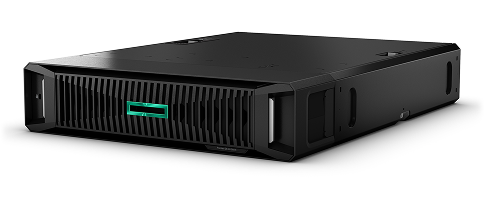
HPE has developed specialized server solutions tailored for edge computing scenarios. For example, the HPE ProLiant DL145 Gen11 server features built-in air filtration, making it suitable for dusty environments.
Moreover, it withstands vibrations from machinery or production lines. The ProLiant DL145 Gen11 also has an ultra-compact design and is 50% smaller compared to the traditional DL385 server. Additionally, it offers improved cooling, high energy efficiency, and low noise levels.
Overall, the HPE ProLiant DL145 Gen11 is an excellent choice for high performance at the network edge at a competitive price. Notably, it opens exciting AI possibilities as it supports up to three Nvidia GPUs, collectively handling up to 120 virtual machines.

Want to Get Ahead?
Sign up for the HPE Compute newsletter to get the latest industry news delivered straight to your inbox. We curate and summarize essential insights into quick, easy-to-read articles so you can stay informed.
By submitting this form, you agree to receive the HPE Compute newsletter at the email address provided.


Intel Xeon: Superior Performance for Modern Data Centers.
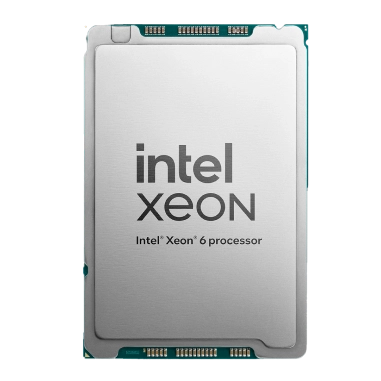

Hardware-based security, high performance, and efficient energy management are just a few of the reasons why Intel Xeon processors are the optimal choice for heavy workloads in data centers. Combined with HPE ProLiant, you are well-equipped in a data-driven world.